 Camaleo
Why the scale lies
Weight is the most available number and the least informative. Understanding what makes it move is what stops it ruining your week.
Updated · 2 min
Two kilos that are not fat
A kilo of fat is roughly 7 700 kcal. To gain one in a day you would have to eat that on top of what you burn. Nobody does that by accident on a Tuesday.
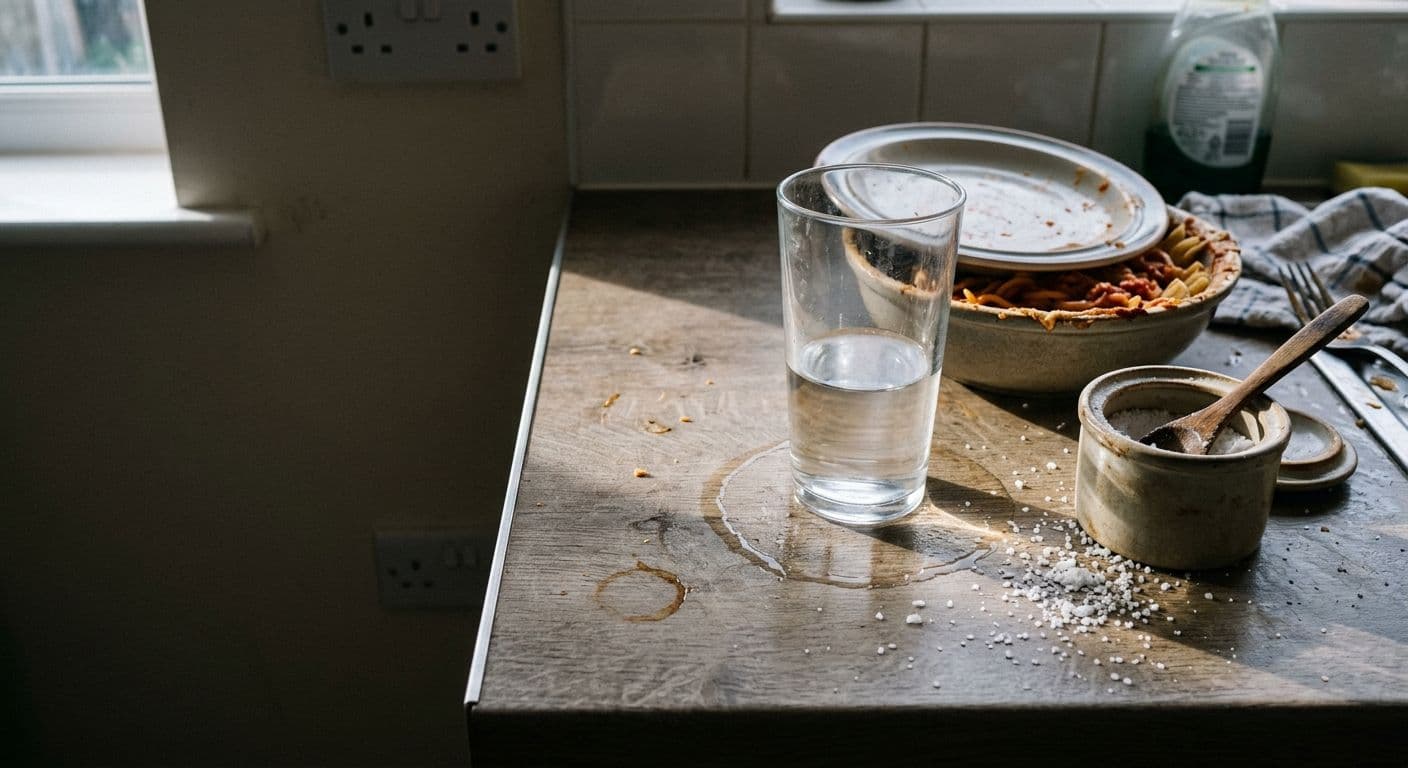
What actually moved is water. Every gram of glycogen — the carbohydrate stored in your muscles and liver — holds about three grams of water with it. A pasta dinner refills that store and the scale answers the next morning, without a single fat cell changing.
Salt, the stage of a menstrual cycle, an unusually hard session, a long flight, and simply what is still in your digestive tract all move the same number by the same amount.
The consequence people get wrong
It is not that weight is useless. It is that a SINGLE weigh-in is useless. One measurement carries the noise of the day and nothing else.
A weekly average, compared to the previous week, cancels most of that noise. Weigh yourself under the same conditions — waking up, after the toilet, before eating — and read the trend, never the day.
A fortnight is even better. Most people who conclude “it is not working” do so on day four of a plan that was working.
What weight cannot tell you at all
It cannot tell muscle from fat. Two people at the same weight and the same height can look nothing alike, and BMI inherits the same blindness — a lifter at 12 % body fat routinely lands in “overweight”.
That is the real limit. If you are training, the useful question is not how much you weigh but what the weight is made of, and no scale answers it — including the ones that claim to.
This is exactly what Camaleo was built around: the numbers that matter are composition and its direction over weeks, not the mass itself.
What to track instead
The weekly average, for the trend. A photo under the same light and the same pose, monthly — it shows what a number cannot. And the weights you lift, which say whether you are keeping muscle while losing fat.
If those three agree, you are on the right path whatever the scale said this morning.
General, informational benchmarks based on common sports nutrition guidelines. They don’t replace a doctor or dietitian, especially with a medical condition.